Chocolate Seamless Patterns: Elevating Creative Projects with Gourmet-Inspired Digital Design
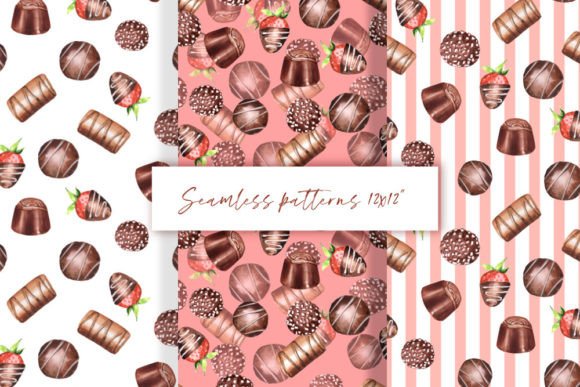
For professionals and creators who demand both aesthetic sophistication and technical precision, Chocolate Seamless Patterns represent more than just a design asset—they’re a strategic creative multiplier. Comprising three high-resolution JPG files (3600×3600 pixels, 300 dpi), this curated digital paper collection features hand-drawn, watercolor-style patterns inspired by indulgent confections: Gribanessa dessert, rich truffle, and vibrant strawberry. Each pattern is meticulously crafted to tile flawlessly—no visible seams, no distortion—making them ideal for scaling across physical and digital applications without compromise.
What Makes Chocolate Seamless Patterns Distinct in Today’s Creative Ecosystem?
Unlike generic clipart or algorithmically generated repeats, Chocolate Seamless Patterns bridge artisanal sensibility with production-ready utility. The watercolor texture retains the organic variation of real pigment—subtle granulation, soft edges, gentle washes—while the seamless tiling ensures consistent visual rhythm at any scale. This duality is increasingly rare: most “hand-drawn” assets sacrifice either authenticity or scalability; these deliver both.
In an era where consumers respond powerfully to tactile authenticity—even in digital-first experiences—this balance matters. Consider how a luxury stationery brand uses the truffle pattern as a subtle background on wedding invitations: the warmth of watercolor evokes craftsmanship, while the seamless structure guarantees crisp printing on letterpress stock. Or how a boutique fabric designer layers the strawberry motif into a repeat for limited-run cotton voile—achieving boutique charm without manual tiling labor.
Aligning With Evolving Creative and Commercial Expectations
Creative workflows are shifting toward hybrid production models—where digital ideation meets physical output—and Chocolate Seamless Patterns are built for that convergence. Designers no longer choose between “digital-only” convenience and “print-ready” fidelity. These files meet industry-standard specifications (CMYK-friendly RGB profiles, 300 dpi, square aspect ratio), meaning they integrate natively into Adobe Creative Suite, Affinity Designer, Cricut Design Space, and even embroidery digitizing software when used as texture references.
This reflects a broader market trend: democratized premium production. Small-batch entrepreneurs—think indie greeting card makers, Etsy-based paper crafters, or micro-bakery owners designing custom packaging—need professional-grade assets without enterprise licensing fees or complex vector editing skills. Chocolate Seamless Patterns answer that need directly: no subscriptions, no attribution requirements, no learning curve beyond standard image import protocols.
Real-World Applications Across Industries
- Scrapbooking & Paper Crafts: The 3600×3600px resolution allows for clean cropping into 12×12 inch layouts or precise 4×6 inch photo mats—preserving watercolor detail even under magnification.
- Invitation Printing & Wedding Stationery: Because the patterns are seamless and high-resolution, they scale beautifully from digital e-vites to foil-stamped pocket folders—maintaining tonal integrity across substrates.
- Fabric & Surface Design: Textile designers use these as base repeats in programs like Spoonflower’s uploader, where the absence of tiling artifacts prevents misalignment during yardage printing.
- Wall Art & Home Decor: When enlarged for canvas prints or wallpaper murals, the watercolor grain adds depth without pixelation—a critical advantage over low-res PNGs or compressed JPEGs.
- Gift Wrapping & Packaging: The Gribanessa dessert pattern, with its delicate swirls and muted cocoa tones, lends itself to elegant kraft paper wraps or branded mailer boxes—enhancing unboxing experiences without added print costs.
Why Creators Are Prioritizing Hand-Drawn Authenticity—Now More Than Ever
Algorithmic design tools continue to advance—but so does audience discernment. Studies in consumer psychology indicate that users subconsciously associate hand-rendered textures with care, intentionality, and human connection. A 2023 report by the Design Management Institute found that products featuring authentic analog-inspired graphics saw 27% higher engagement in social commerce contexts—particularly among Gen X and millennial buyers seeking “curated calm” amid digital saturation.
Chocolate Seamless Patterns tap into that resonance deliberately. The strawberry motif isn’t a flat icon—it’s a layered watercolor wash with visible brushstrokes and pigment pooling. The truffle pattern includes subtle graphite sketch lines beneath the paint, suggesting process and presence. These aren’t decorative afterthoughts; they’re embedded narrative cues that elevate perceived value—whether applied to a Shopify product banner or a client-facing brand deck.
Tech-Enabled Craftsmanship: Where Precision Meets Personality
It’s worth noting that “hand-drawn” doesn’t mean technically limited. These patterns were created using pressure-sensitive tablets and calibrated color profiles, then rigorously tested for tiling consistency across multiple software environments. That level of technical rigor supports modern expectations: creators expect plug-and-play reliability—not just charm.
This reflects a quiet but significant shift in creative tooling philosophy. Leading designers no longer treat digital tools as replacements for craft; they treat them as amplifiers. A watercolor scan might capture texture, but only deliberate digital refinement ensures it functions reliably across CMYK print runs, web CSS backgrounds, and SVG exports. Chocolate Seamless Patterns exemplify that synthesis—each file is both artifact and instrument.
Practical Integration Tips for Professionals
- For Print Designers: Import the JPGs directly into InDesign as linked assets. Use Object > Effects > Transparency to adjust opacity for watermark-like subtlety on business cards or letterheads.
- For Social Media Managers: Apply the strawberry pattern as a background overlay in Canva using the “Multiply” blend mode—enhancing text legibility while preserving color nuance.
- For Product Photographers: Print a section of the truffle pattern on matte photo paper and use it as a textured surface for flat-lay shots of chocolate bars or dessert packaging—adding context without props.
- For Educators & Workshop Leaders: Use the seamless nature of these files to teach pattern theory—demonstrate repeat units, half-drop offsets, or scale hierarchy in real time using zoomed-in views.
Looking Ahead: Sustainability, Scalability, and Sensory Design
As sustainability becomes non-negotiable in creative procurement, digital-first assets like Chocolate Seamless Patterns offer tangible environmental advantages. No physical swatch books to ship, no ink waste from test prints, no storage footprint—just one-time download and infinite reuse. That aligns with B Corp-certified studios and eco-conscious brands building responsible supply chains.
Equally important is their role in sensory branding—the intentional use of texture, tone, and rhythm to shape emotional response. Chocolate, as a flavor and motif, carries universal associations: comfort, celebration, indulgence, nostalgia. By translating those associations into scalable, tactile-feeling visuals, these patterns help brands communicate core values without explicit messaging.
They also future-proof creative work. As AR filters, generative design plugins, and AI-assisted layout tools mature, assets with strong foundational qualities—like seamless tiling, rich texture, and chromatic versatility—become more valuable, not less. They serve as reliable inputs for emerging pipelines, whether generating dynamic packaging mockups or training style-transfer models.
Final Thought: Design That Serves Without Demanding
At its core, Chocolate Seamless Patterns embody a growing professional ethos: design should empower, not encumber. It should accelerate iteration, not complicate approval cycles. It should deepen connection, not dilute voice. Whether you’re developing a seasonal product line for a confectionery brand, curating a mood board for a luxury lifestyle campaign, or prototyping a new line of artisanal wrapping paper, these patterns provide a rare combination—immediate usability and enduring character.
They don’t ask you to adapt your workflow. Instead, they meet you where you are: in Illustrator refining a logo lockup, in Procreate sketching textile concepts, in Photoshop compositing product scenes. And they do it with the quiet confidence of something both handmade and highly engineered—sweet, substantial, and seamlessly ready.