Seamless Patterns Designs: Unlocking Versatile, High-Resolution Creativity for Sublimation and Fabric-Based Projects
Seamless Patterns Designs represent a foundational resource for creators who bridge digital artistry with physical production—especially in sublimation printing, textile design, and customizable merchandise. Unlike static graphics or isolated motifs, these patterns are engineered to repeat infinitely without visible seams, enabling consistent, professional-grade coverage across surfaces of any scale. What sets this particular collection apart is its intentional optimization for real-world manufacturing workflows: from heat-transfer applications on polyester apparel to ceramic mug decoration, soft home goods like pillows, and durable vinyl decals.
Why Seamless Matters—Beyond Aesthetics to Functionality
A truly seamless pattern isn’t just visually cohesive—it’s technically precise. Each tile edge aligns pixel-for-pixel with its adjacent counterpart, eliminating misalignment artifacts that become glaringly obvious during large-format printing or when stretched across curved objects like mugs or tumblers. This precision is non-negotiable in sublimation, where ink migrates under heat and pressure into the substrate’s fibers or coating. Any discontinuity in the pattern translates directly into a visible “stitch line” or color shift—a flaw that undermines perceived quality and brand credibility.
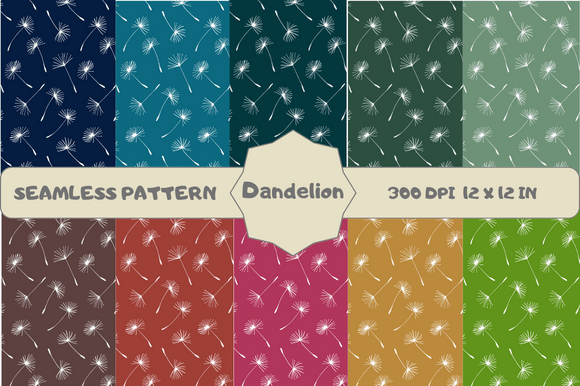
The Seamless Patterns Designs set delivers exactly that reliability: 12 × 12 inch JPG files at 3600 × 3600 pixels, rendered at 300 dpi. That resolution ensures crisp reproduction even when scaled to cover full-yard fabric bolts or printed at high density on small items like coasters or phone cases. The consistent dimensions also simplify integration into common design platforms—whether you’re importing into Adobe Illustrator for vector refinement, loading into Cricut Design Space for cut-file prep, or dragging directly into Sawgrass Print Manager for sublimation output.
Sublimation-First Design Logic
Sublimation printing demands more than visual appeal—it requires color fidelity, edge stability, and thermal resilience. These Seamless Patterns Designs were created with sublimation-specific constraints in mind. For instance, the color profiles avoid extreme saturation traps that cause bleeding on coated substrates, and contrast levels are calibrated to remain legible after the dye-sublimation process, which can subtly mute shadows and lift midtones.
Consider t-shirt production: a seamless floral motif applied across a black polyester blend must retain definition in both light and dark areas. Because these patterns are built at full 300 dpi resolution and optimized for CMYK-friendly RGB gamuts, they translate predictably to printed output—no unexpected banding, no ghosting at tile boundaries, and minimal post-processing required. Similarly, when applied to ceramic mugs, the same pattern wraps cleanly around the curvature without distortion, provided the base file is correctly sized for the mug’s printable area (typically 8.5 × 3.5 inches for standard 11 oz models).
Real-World Applications Across Industries
- Fashion & Apparel: Designers use these patterns to develop limited-run collections—think custom-lined jackets, reversible scarves, or performance-wear leggings—without investing in costly screen-print setup or minimum fabric orders.
- Home Décor Entrepreneurs: Small-batch pillow producers integrate the designs directly into POD (print-on-demand) platforms like Printful or Gelato, uploading the 3600 × 3600 px JPGs to generate mockups and fulfill orders with zero inventory risk.
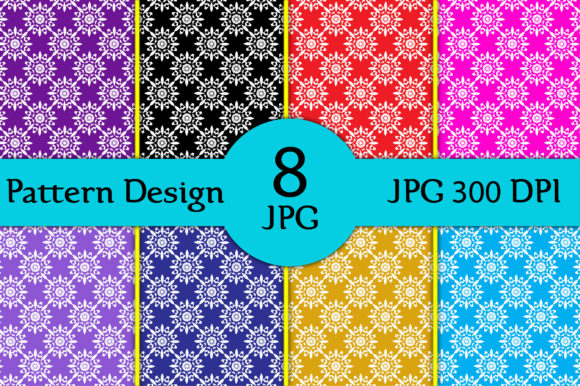
- Educational Makerspaces: Instructors leverage the ZIP package’s eight distinct patterns to teach repeat grid construction, color theory in context, and digital-to-physical workflow mapping—giving students hands-on experience with industry-standard file specs.
- Event & Brand Merchandise: Marketing teams apply the graphics to branded water bottles, tote bags, and lanyards using sublimation presses, ensuring logo-aligned continuity across touchpoints without redesigning each item separately.
- Craft-Based Businesses: Etsy sellers combine the patterns with cutting machines (e.g., Silhouette Cameo or Brother ScanNCut) to create layered iron-on transfers, adding texture and dimension to handmade garments or accessories.
Technical Readiness: What You Receive—and Why It Matters
This collection includes eight unique digital pattern files delivered as a single ZIP archive. Each file is a high-fidelity JPG—no layers, no transparency, no embedded metadata bloat. That simplicity is deliberate: it ensures compatibility across devices and software, from Windows-based heat press controllers to iPad Procreate workflows. The absence of PSD or PNG variants isn’t a limitation; it’s a signal of purpose-built utility.
At 3600 × 3600 pixels, each image supports up to 12-inch square print areas at true 300 dpi—ideal for craft printers like the Epson SureColor F170 or Sawgrass SG400. For larger applications, designers can tile the pattern manually in layout software or rely on built-in repeat functions in Affinity Designer or CorelDRAW. Because the edges match precisely, scaling introduces no artifacts—even when enlarged to cover a 60-inch wide banner or reduced to fit a 2-inch diameter coaster.
The term “Magic Crafter” referenced in the product description reflects an emerging expectation among digital crafters: that assets should behave intuitively across tools and contexts. These files meet that standard—not through proprietary formats or locked ecosystems, but through adherence to universal technical conventions: sRGB color space, baseline JPG compression, and strict dimensional consistency.
Workflow Integration Without Friction
Unlike generic clipart bundles, Seamless Patterns Designs support end-to-end production without conversion bottlenecks. A user working in Canva can upload the JPG directly, adjust opacity or overlay text, and export for printing—no need to “flatten layers” or “rasterize effects.” Someone using Silhouette Studio can import the file, trace it if needed for cut lines, and send it to their machine in under two minutes. Even educators preparing classroom handouts benefit: the clarity holds up when projected on large displays or shrunk into PDF worksheets.
This interoperability extends to commercial print providers. Many fulfillment services accept JPG uploads without requiring preflight checks for bleed or trim—because the files already conform to standard production specs. That reduces turnaround time and eliminates back-and-forth communication over file readiness.
Design Considerations for Long-Term Usability
While resolution and seamlessness are critical, longevity hinges on thoughtful composition. These eight patterns avoid over-reliance on trend-dependent elements—no dated gradients, no fleeting micro-typography, no culturally narrow iconography. Instead, they emphasize timeless structure: balanced negative space, rhythmic repetition, and adaptable color palettes that work equally well in monochrome, duotone, or full-spectrum applications.
For example, one pattern may feature interlocking geometric shapes that read cohesively whether printed in navy on ivory cotton or reversed as white on charcoal polyester. Another might use organic linework inspired by botanical sketches—detailed enough to feel artisanal, yet simplified enough to retain clarity at small scales. This duality makes them suitable for both luxury branding (where subtlety conveys sophistication) and youth-oriented products (where bold rhythm drives engagement).
Importantly, none require attribution or impose usage restrictions beyond standard digital license terms. Creators can embed them into client deliverables, incorporate them into SaaS platform templates, or adapt them for resale—provided the final product is physically realized (not redistributed as raw digital files). That flexibility supports ethical monetization while respecting intellectual property norms.
Who Benefits Most—and How They Apply the Value
Professionals in textile development appreciate the ability to test pattern behavior across fiber types—comparing how the same design renders on stretch-knit versus woven poplin—before committing to sampling. Hobbyists discover new confidence in tackling multi-step projects: designing a matching pillow-and-mug set becomes intuitive when the visual language is unified and technically robust. Researchers studying material–pattern interaction use the consistent base files to isolate variables like ink absorption rate or thermal transfer efficiency.
Even educators designing STEAM curricula find utility here. A lesson on symmetry can move beyond paper folding to include digital tiling logic; a unit on entrepreneurship can incorporate mockup generation, cost-per-unit calculation, and market testing—all anchored in the same high-quality asset set. That cross-disciplinary resonance underscores why Seamless Patterns Designs function not just as graphics, but as pedagogical and operational infrastructure.
Looking Ahead: Trends Reinforcing Their Relevance
Three macro-trends are amplifying demand for this kind of resource. First, the rise of hybrid manufacturing—where digital design meets local, small-batch physical output—relies on plug-and-play assets that eliminate friction between concept and object. Second, sustainability pressures are pushing brands toward made-to-order models, which depend on versatile, scalable graphics rather than static SKUs. Third, AI-assisted design tools increasingly use high-quality, human-curated pattern libraries as training inputs—making well-structured, technically sound resources like this set more valuable as foundational data.
In that evolving landscape, Seamless Patterns Designs stand out not for novelty, but for quiet reliability: predictable dimensions, proven sublimation performance, and broad compatibility. They don’t shout for attention—they enable attention to be directed elsewhere: toward innovation, storytelling, craftsmanship, and meaningful connection between creator and audience.