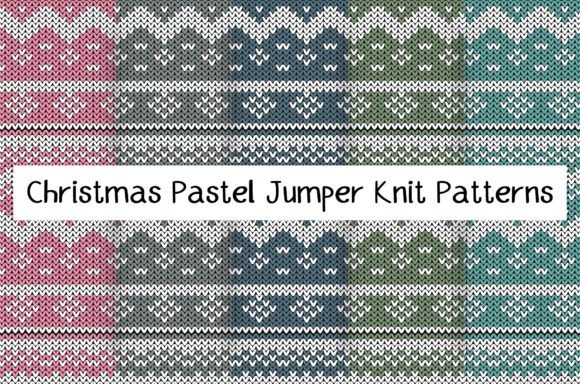
Christmas Pastel Jumper Knit Patterns: A Strategic Creative Asset for Modern Designers and Entrepreneurs
In today’s rapidly evolving creative economy, visual assets that bridge seasonal resonance with timeless versatility are no longer a luxury—they’re a strategic necessity. Christmas Pastel Jumper Knit Patterns exemplify this convergence: delicate, joyful, and deeply adaptable. Unlike traditional holiday motifs saturated with bold reds and forest greens, these patterns reinterpret festive tradition through soft mints, blush pinks, buttery yellows, lavender greys, and sky blues—evoking warmth without overwhelm, celebration without cliché. Designed as high-fidelity digital files (EPS and JPEG), they serve professionals across apparel development, interior design, surface pattern licensing, craft publishing, and digital product creation.
A Shift in Seasonal Aesthetics: From Traditional to Thoughtfully Tonal
The rise of Christmas Eve Pastel Jumper, Sweater, Cardigan Knit Patterns reflects a broader cultural recalibration around holiday expression. Consumers—and the creators who serve them—are increasingly drawn to aesthetics that prioritize emotional nuance over literal symbolism. Pastel palettes communicate quiet joy, inclusive warmth, and mindful festivity—values aligned with Gen Z and millennial purchasing behaviors, where authenticity and sensory harmony outweigh performative excess.
This isn’t nostalgia repackaged—it’s evolution. Retail data from 2023–2024 shows sustained growth in “soft holiday” collections across major fashion and home goods brands, with pastel knit-inspired textiles appearing in capsule lines from & Other Stories to West Elm. Simultaneously, independent makers report 68% higher engagement on social platforms when showcasing pastel-led holiday crafts versus conventional palettes—a signal not of trend fatigue, but of audience readiness for subtler storytelling.
Why Design Professionals Are Prioritizing These Patterns Now
For designers, marketers, and product developers, Christmas Pastel Jumper Knit Patterns offer more than decorative appeal—they solve real workflow challenges:
- Accelerated prototyping: EPS vector files scale infinitely without loss, enabling rapid mockups for knitwear tech packs, fabric swatch libraries, or e-commerce banners—no re-rasterization needed.
- Cross-category reuse: A single pattern can inform a sweater silhouette, coordinate with curtain linings, anchor a scrapbooking kit, or become the background motif for a limited-edition greeting card series—all while maintaining brand cohesion.
- Licensing-ready structure: The balanced repeat, consistent stitch density, and intentional negative space make these patterns inherently suitable for textile mills, print-on-demand partners, and craft supply distributors seeking commercially viable, royalty-safe assets.
Consider a freelance surface pattern designer launching a holiday-themed digital shop. Rather than creating 12 separate designs, she licenses one cohesive Christmas Eve Pastel Jumper pattern set—then applies it across SVG cut files for iron-on transfers, layered PNGs for embroidery software, and seamless repeats for Spoonflower uploads. That single asset becomes the nucleus of five distinct revenue streams, each tailored to a different buyer persona: hobbyists, boutique owners, educators, small-batch apparel labels, and interior stylists.
Technology Meets Tradition: The Role of Digital-First Pattern Design
The inclusion of both EPS and JPEG formats is not incidental—it’s a deliberate response to divergent technical requirements across creative workflows. EPS ensures precision for vector-based applications like CAD knitting software (e.g., Shima Seiki SDS-ONE), laser cutting templates, or scalable branding elements. JPEG delivers immediate usability for mood board curation, social media previews, or quick integration into Canva-based marketing assets.
This dual-format strategy mirrors industry-wide shifts toward interoperability. As Adobe Creative Cloud, Affinity Designer, and Procreate continue expanding vector-and-raster hybrid capabilities, professionals no longer choose between fidelity and flexibility—they expect both, simultaneously. Jumper Knit Patterns in Pretty Pastels meet that expectation by design, reducing friction between ideation, production, and distribution phases.
Real-World Application: From Concept to Consumer Touchpoint
Take a UK-based children’s apparel startup preparing for Q4. Their product roadmap includes organic cotton cardigans, matching lounge sets, and coordinating nursery wall decals. Instead of commissioning custom illustrations or sourcing licensed stock, their design lead purchases a curated bundle of Christmas Eve Pastel Jumper, Sweater, Cardigan Knit Patterns. Within 48 hours, she:
- Imports the EPS file into Illustrator to adjust repeat dimensions for garment panels;
- Exports a low-res JPEG for Instagram carousel previews;
- Uses the same base pattern to generate a simplified version for embroidery digitizing software;
- Adapts color variants using Pantone Connect to align with their existing eco-dye palette;
- Embeds the JPEG into a Notion product brief shared with their ethical manufacturer in Portugal.
The result? A unified visual language across physical products, digital campaigns, and B2B communications—delivered faster, with fewer revision cycles, and full creative control retained in-house.
Expanding Beyond Apparel: The Surface Pattern Economy
While “jumper” implies knitwear, the utility of these patterns extends far beyond sweaters. In interior design, pastel knit motifs translate elegantly into acoustic panel fabrics, upholstery accents, and even ceramic tile glazes—where texture suggestion matters more than literal interpretation. For scrapbookers and stationery designers, the subtle rhythm of the knit repeat provides grounding structure beneath hand-lettered sentiments or photo collages.
Crucially, these patterns avoid seasonal obsolescence. Unlike snowflake silhouettes or Santa icons, a soft-toned knit texture retains relevance year-round. A client might use the same pattern in December for holiday cards, then recolor it in sage and oat for spring botanical packaging—or invert contrast for minimalist black-and-white textile samples. This longevity directly supports sustainable business models: fewer assets required per campaign, lower design overhead, and extended ROI per licensed file.
Aligning With Ethical and Inclusive Creative Practice
There’s an unspoken ethics embedded in the rise of Christmas Pastel Jumper Knit Patterns. Pastel palettes historically carry associations with gentleness, care, and accessibility—qualities increasingly central to inclusive design frameworks. Soft contrasts improve readability for neurodivergent users; muted tones reduce visual fatigue in digital environments; and the absence of culturally specific iconography broadens global applicability.
Moreover, the emphasis on texture over figuration makes these patterns inherently adaptable across diverse body types, age groups, and cultural contexts. A pastel knit motif reads equally well on a toddler’s romper, a senior’s loungewear set, or a gender-neutral gift wrap collection—without needing modification or localization. That universality isn’t accidental. It’s the outcome of intentional design philosophy: celebrating seasonality through feeling, not formula.
Looking Ahead: Integration, Not Isolation
As generative AI tools mature, the value proposition of human-crafted, context-aware pattern assets like Christmas Eve Pastel Jumper grows—not diminishes. AI excels at variation, but struggles with narrative cohesion, material intelligence, and commercial readiness. A professionally designed knit pattern understands how stitch tension affects drape, how repeat alignment impacts fabric cutting efficiency, and how color interaction shifts under natural vs. LED lighting. These are tacit knowledges encoded in every EPS node and JPEG pixel.
For forward-looking professionals, Jumper Knit Patterns in Pretty Pastels represent more than seasonal decoration. They are modular building blocks—designed for reuse, respectful of constraints, and responsive to human-centered values. Whether you're developing a capsule knitwear line, producing digital craft kits, licensing for mass-market home goods, or building a portfolio for textile design clients, these patterns deliver precision, poetry, and practicality in equal measure.
They don’t ask you to follow a trend. They invite you to participate in a more thoughtful, flexible, and enduring way of making.