Geometrical Seamless Patterns 05: A Practical Evaluation for Designers and Digital Creators
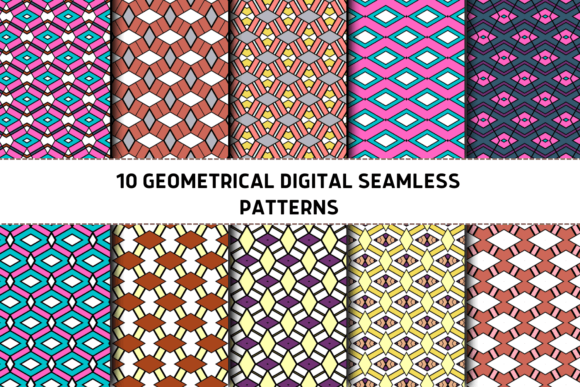
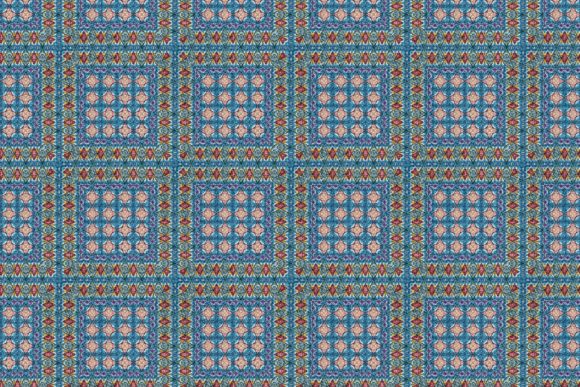
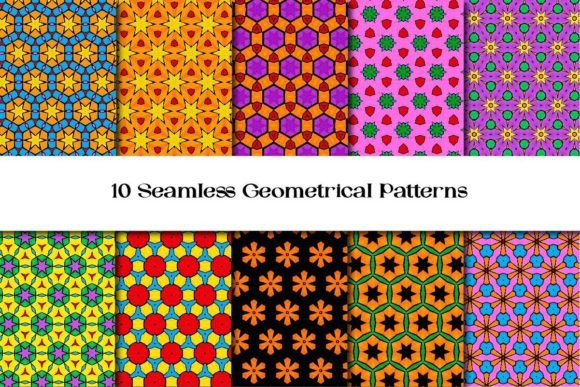
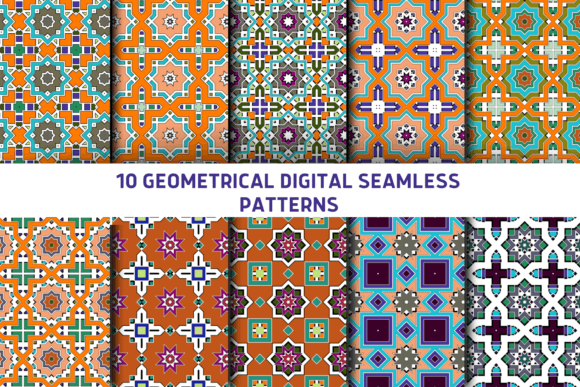
Geometrical Seamless Patterns 05 is a curated subset of a broader 20-pattern bundle designed specifically for professionals and creators who need precision, scalability, and visual consistency in digital surfaces. Unlike generically labeled “geometric” pattern packs that rely on repetition alone, this collection emphasizes intentional structure—think interlocking hexagons with subtle tonal gradation, asymmetric tessellations with balanced negative space, or minimalist line-based grids calibrated for both screen and print fidelity. Each pattern is built to tile without visible seams at any scale, and all are delivered at 5000×5000 pixels—a resolution that comfortably supports high-DPI displays, large-format wall installations, and layered compositing workflows.
What Sets Geometrical Seamless Patterns 05 Apart from Other Pattern Resources
Many seamless pattern libraries prioritize quantity over contextual versatility. Some offer dozens—or even hundreds—of designs, but with inconsistent sizing, variable contrast levels, or overly saturated palettes that limit adaptability. Geometrical Seamless Patterns 05 avoids those pitfalls by focusing on cohesion: the 20 patterns share a unified design language rooted in proportion, rhythm, and restrained color harmony. None rely on photorealistic textures or noise overlays; instead, they use clean vector-derived geometry rendered in flat, editable tones—making them ideal for designers who need to adjust hue, luminance, or saturation non-destructively in Photoshop or Figma.
File format flexibility also contributes to its practicality. PNG files retain transparency, enabling immediate use as overlays or layer masks—especially useful when applying patterns to UI elements like app screens or button mockups. JPG versions provide lightweight alternatives for web backgrounds where transparency isn’t required. This dual-format delivery isn’t universal across similar bundles; many competitors supply only one format, forcing users to convert or compromise on quality.
Real-World Use Cases and Workflow Integration
Designers working on interior visualization tools often use Geometrical Seamless Patterns 05 to simulate wallcoverings or cubicle panel textures in 3D renders—its high resolution ensures crisp detail even when zoomed into architectural close-ups. Similarly, UX teams building dashboard interfaces apply these patterns as subtle background layers behind data cards or navigation menus. Because each tile aligns precisely edge-to-edge, there’s no risk of misalignment during responsive resizing, unlike custom-built CSS patterns that may break across breakpoints.
In branding projects, these patterns serve as structural anchors—not as decorative flourishes, but as underlying compositional guides. For example, a financial services client might select a low-contrast triangular grid from Geometrical Seamless Patterns 05 to reinforce stability and logic across their website, email templates, and presentation decks. The same pattern can then be recolored to match brand guidelines without losing integrity, thanks to its vector-informed construction.
Comparing Scalability and Output Requirements
Resolution matters—but not always in the way people assume. While 5000×5000 pixels sounds generous, it’s most valuable when outputting to physical media (e.g., wallpaper murals up to 10 feet wide) or when using patterns as base layers in multi-layered PSD files where scaling down preserves sharpness. For purely digital applications—like mobile app backgrounds or social media banners—smaller files (e.g., 2000×2000) often suffice and reduce load times. In those cases, Geometrical Seamless Patterns 05 may be over-specified unless you anticipate future repurposing or plan to blend multiple layers.
By contrast, procedural pattern generators (like those built into Substance Designer or online SVG tiling tools) offer infinite variation but require technical familiarity and time investment. Geometrical Seamless Patterns 05 trades customization for immediacy: what you see is production-ready, tested, and optimized—not a starting point requiring refinement.
When Geometrical Seamless Patterns 05 Fits—and When It Doesn’t
This bundle excels in time-constrained scenarios where visual cohesion and technical reliability outweigh the need for bespoke pattern creation. If you’re producing a set of 12 social media posts for an architecture firm and need consistent, professional-grade backgrounds in under two hours, Geometrical Seamless Patterns 05 delivers predictable results without trial-and-error testing.
It’s less suitable if your project demands extreme stylistic specificity—for instance, a vintage-inspired geometric motif with distressed edges or hand-drawn imperfections. Those qualities fall outside its scope. Likewise, if your workflow relies heavily on parametric control (e.g., adjusting line weight or spacing dynamically via sliders), a scriptable solution or custom-built asset library would offer more flexibility than static raster files.
Another consideration is licensing scope. While the bundle permits commercial use—including resale in end products like templates or themes—it doesn’t grant rights to resell the patterns themselves as standalone assets. Users integrating them into SaaS platforms or white-label design systems should verify usage terms align with their deployment model.
Practical Alternatives Worth Considering
- SVG-based pattern libraries: Offer true scalability and smaller file sizes, especially for web use. However, browser rendering inconsistencies and limited support for complex gradients or blending modes can complicate implementation.
- Procedural texture generators: Provide real-time variation and fine-grained control, but demand learning curves and aren’t plug-and-play for non-technical team members.
- Custom pattern commissioning: Ensures exact alignment with brand identity but carries higher cost, longer lead times, and dependency on external designers.
Geometrical Seamless Patterns 05 sits between those options: more reliable than generated assets, more accessible than commissioned work, and more production-ready than generic free downloads—which often lack documentation, uniform sizing, or consistent color profiles.
Making an Informed Choice Based on Your Project Needs
No single pattern resource serves every context equally. The value of Geometrical Seamless Patterns 05 lies in its balance of quality assurance, format versatility, and design discipline—not in being the largest or flashiest option available. Its strength emerges when you need to move quickly without sacrificing polish, especially across mixed-output environments (web, print, 3D, UI).
If your current workflow involves manually stitching tiles, adjusting contrast per pattern, or converting formats mid-project, this bundle reduces friction. If you routinely build patterns from scratch or rely on dynamic generation, it may supplement—but not replace—your existing toolkit.
Ultimately, evaluating Geometrical Seamless Patterns 05 isn’t about whether it’s “the best,” but whether its specific attributes—resolution, format options, cohesive aesthetic, and seamless tiling behavior—match the constraints and goals of your next project. For designers balancing speed, consistency, and visual integrity, it remains a well-calibrated option worth including in comparative assessments.