Geometrical Seamless Patterns Bundle 01: A Practical Evaluation for Designers and Creators
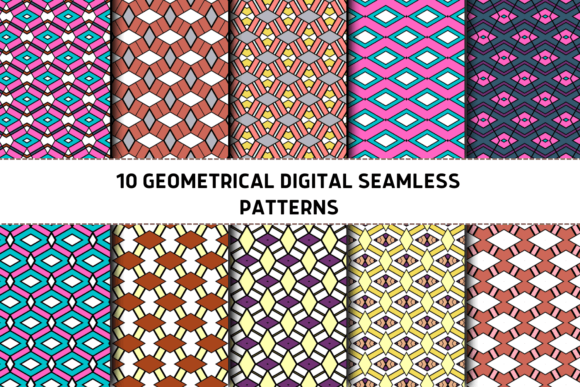
Geometrical Seamless Patterns Bundle 01 is a curated digital asset pack containing 20 high-resolution, tileable geometric patterns. Each pattern is delivered in both PNG and JPG formats at 5000×5000 pixels—offering flexibility for both screen-based and print-adjacent applications. Unlike generative tools or single-pattern downloads, this bundle prioritizes consistency, resolution integrity, and immediate usability across design workflows.
What Sets This Bundle Apart From Other Pattern Resources
Many designers encounter two common challenges when sourcing seamless patterns: inconsistent scaling across resolutions and unpredictable tiling behavior. Geometrical Seamless Patterns Bundle 01 addresses both by delivering all patterns at the same large canvas size with verified edge alignment. This eliminates the need for manual seam correction—a time-consuming step often required with lower-resolution or user-generated assets.
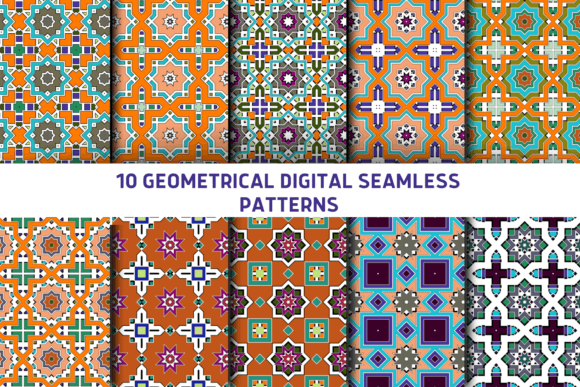
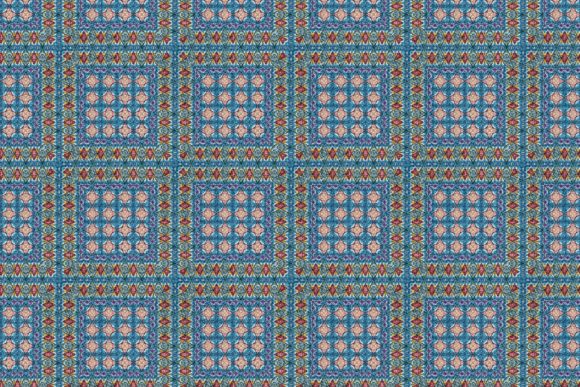
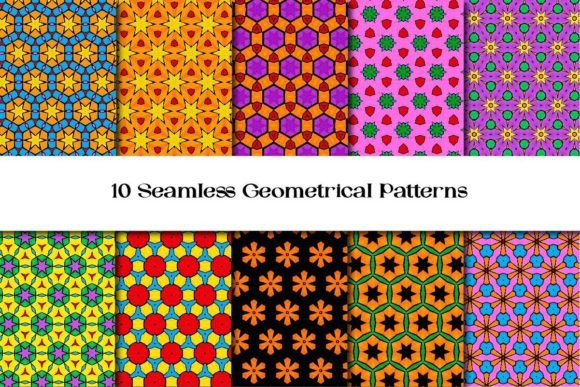
The geometry itself leans toward clean, modern abstraction: interlocking hexagons, subtle grid overlays, angular tessellations, and rhythmically spaced dot matrices. These aren’t ornate or illustrative—they’re structural. That makes them especially suitable for professional environments where visual noise must remain minimal but texture remains intentional.
Compared to algorithmic pattern generators (e.g., CSS-based tiling tools or AI pattern plugins), this bundle trades real-time customization for reliability and visual cohesion. You won’t be able to adjust color on-the-fly or morph shapes mid-design—but you gain predictable output, consistent file naming, and no dependency on external software or internet connectivity.
Practical Use Cases—and Where They Align With Real Workflows
Interior designers use Geometrical Seamless Patterns Bundle 01 for cubicle wall treatments and office accent zones. Because each pattern scales cleanly up to large-format prints, they translate well to vinyl wraps or fabric-backed panels without pixelation—even at viewing distances under one meter.
UI/UX professionals apply these patterns as subtle background layers behind app screens or dashboard elements. The 5000×5000 resolution allows generous cropping and zooming while preserving clarity on retina displays. When layered with a Screen blend mode over photography or illustrations, many of the patterns add depth without competing for attention—a technique especially effective for hero sections or branded landing pages.
Graphic designers building presentation decks or pitch materials benefit from the bundle’s ready-to-use nature. Rather than constructing custom grids in Illustrator or adjusting opacity masks repeatedly, users can drop a pattern into a slide, resize it to cover the frame, and move on—without compromising fidelity.
Format Considerations: PNG vs. JPG in Practice
The inclusion of both PNG and JPG files reflects thoughtful preparation for different technical needs. PNGs preserve transparency, making them ideal for overlay work, button mockups, or layered web UI components where background color may vary. JPGs offer smaller file sizes and broader compatibility—especially useful when embedding into email templates, CMS platforms with strict upload limits, or legacy design software that handles raster transparency inconsistently.
Note: None of the patterns include vector variants (e.g., SVG or AI files). If your workflow depends heavily on infinite scalability—such as large-scale signage or embroidery digitizing—this bundle serves best as a starting reference or texture base, not a final production asset.
How It Compares With Broader Pattern Categories
Geometric patterns sit between organic (e.g., watercolor textures, foliage repeats) and typographic (e.g., letterform-based tiles) categories. Their strength lies in neutrality: they don’t evoke specific eras or moods like Art Deco motifs or retro wave lines might. That neutrality supports longevity in branding projects and reduces revision cycles during stakeholder feedback.
When compared to photorealistic seamless textures (e.g., concrete, linen, brushed metal), geometric patterns offer more control over contrast, tone, and density. You can easily recolor them via layer adjustments or CSS filters—something far less predictable with scanned physical surfaces.
However, if your goal is tactile authenticity—say, simulating the irregularity of hand-stitched fabric or weathered brick—Geometrical Seamless Patterns Bundle 01 won’t replicate those qualities. Its precision is intentional, not limiting—but it does define its scope.
When This Bundle Is the Right Fit
This resource works best when you value speed, consistency, and resolution headroom over granular customization. Teams working under tight deadlines—like marketing agencies producing seasonal campaigns or startups iterating on MVP interfaces—often find it more efficient to select from 20 polished options than build from scratch.
It also suits individuals who prefer working in raster-based environments (Photoshop, Figma with raster imports, Canva Pro) rather than vector-first tools. The high-res raster format integrates smoothly into those contexts without conversion steps or fidelity loss.
When You Might Look Elsewhere
If your project requires dynamic adaptation—such as responsive patterns that shift density based on viewport width—CSS repeating-linear-gradient() or SVG-based tiling may offer more flexibility and smaller payloads. Similarly, if accessibility compliance is a priority (e.g., WCAG contrast ratios for text overlays), manually testing each pattern against foreground content remains necessary—no bundle automates that verification.
For long-term brand systems requiring unique IP, licensing pre-made patterns—even high-quality ones—may conflict with internal guidelines around originality. In such cases, commissioning a custom set or using parametric design tools with export capabilities could better align with strategic goals.
Integration Tips That Improve Real-World Results
- Layer blending: As noted in the product description, using Screen or Multiply blend modes helps integrate patterns with imagery without flattening hierarchy.
- Cropping strategy: Because all patterns are 5000×5000, avoid center-cropping unless symmetry is part of the design intent. Off-center placement often yields more dynamic compositions.
- Color adaptation: Apply Hue/Saturation or Color Lookup adjustments non-destructively to match brand palettes—most patterns respond well to global tonal shifts without losing definition.
- Scale awareness: Zoom out before finalizing. A pattern that reads clearly at 100% may become visually overwhelming at 200% scale on mobile previews.
Final Considerations Before Choosing
Geometrical Seamless Patterns Bundle 01 isn’t about replacing design skill—it’s about removing repetitive technical hurdles. Its value emerges most clearly when weighed against time spent troubleshooting tiling artifacts, upsampling low-res assets, or managing inconsistent file naming across pattern libraries.
That said, it doesn’t replace foundational knowledge: understanding how contrast affects readability over patterned backgrounds, how grid alignment impacts layout stability, or how resolution requirements differ between web banners and trade show backdrops remains essential. This bundle supports those decisions—it doesn’t make them for you.
If your current process involves searching across multiple marketplaces for individual patterns, juggling mismatched resolutions, or re-exporting the same design in five formats just to test legibility—you’ll likely notice measurable efficiency gains. But if your needs skew toward experimental, highly adaptive, or deeply bespoke outputs, treat this as one reliable tool among several—not a universal solution.